ServicesEnergy Efficient Windows
Energy Efficient Windows in Corona
We replace tired, leaky windows with dual-pane Low-E units that keep afternoon heat outside and conditioned air inside. Your AC works less and your rooms stay even. The frames, floors and furniture near the glass last longer too.
Windows That Take Strain Off the Rest of Your Home
An energy efficient window does two jobs. It slows heat moving through the glass, and it seals tight in the opening so air doesn't slip around it. Older single-pane aluminum windows do neither well. Early dual-pane units often lose their gas fill and seal over time and stop helping.
We look at it as care for the whole house. When less heat pours through the glass, your air conditioner runs shorter cycles. Sun-facing rooms stop baking, and UV light stops bleaching your flooring and window sills. Better windows protect the things around them.
If your frames are sound and you only want better glass performance, our window retrofitting page explains that route. If the whole unit is failing, full window replacement is usually the better long-term answer. We'll tell you honestly which one fits.
What Goes Into Each Window
Low-E glass matched to the sun
Low-E coatings are thin metal layers on the glass that reflect heat while letting daylight through. We pick a coating with a low solar heat gain number for west- and south-facing walls, where afternoon sun does the most damage.
Dual-pane units with gas fill
Two panes separated by an insulating gas, usually argon, slow heat transfer far better than a single sheet of glass. Warm-edge spacers between the panes help keep the seal from breaking down.
Insulated vinyl frames
Multi-chamber vinyl frames don't conduct heat the way old aluminum frames do. They won't rust or need painting, so they hold up with very little upkeep.
A tight, sealed install
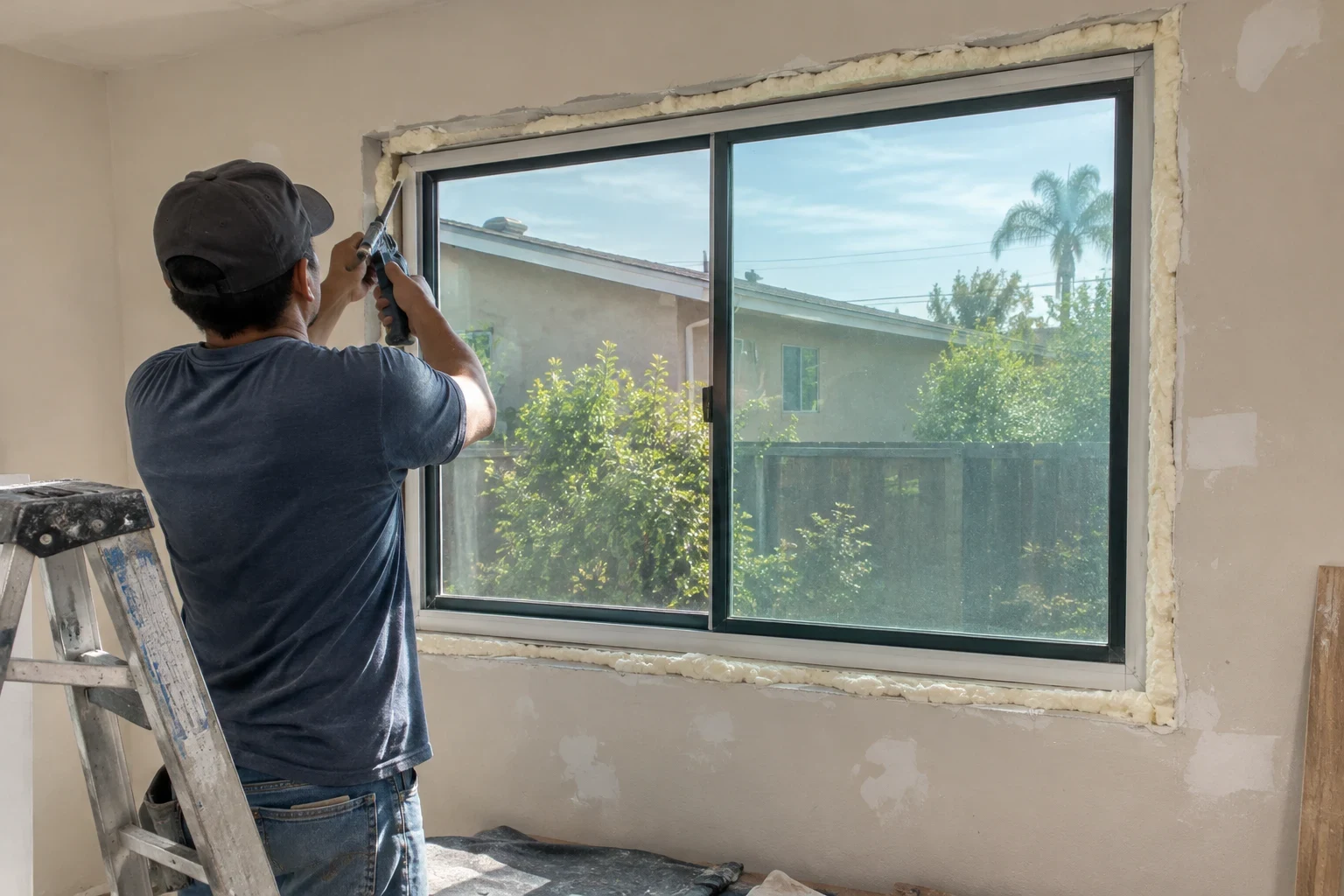
Even the best glass leaks energy if the opening isn't sealed. We shim, insulate and seal the gap around each frame so drafts and dust stay out.
Labels you can check
Each window carries a rating label showing its U-factor and solar heat gain. We walk you through what those numbers mean before you decide, so you know what you are paying for.
Signs Your Windows Are Costing You Energy
Rooms that bake every afternoon
If one side of the house is hot by late afternoon while the rest feels fine, the glass on that side is letting in too much solar heat.
Fog or haze between the panes
Cloudiness trapped inside a dual-pane unit means the seal along its edge has failed. The insulating gas escapes through that same gap, leaving the window barely better than plain single glass.
Glass that feels hot to the touch
Put your hand on the inside of the glass on a sunny day. If it's warm, heat is coming straight through into your living space.
Faded floors and furniture
Sun-bleached rugs, wood floors or upholstery near a window point to UV coming through uncoated glass.
Drafts, whistling or dust on the sills
Gaps around old frames let in air on windy days and a fine layer of dust after. That same gap lets your cooled air escape.
An AC that never seems to rest
Corona summers push air conditioners hard. Inefficient windows make it harder, which means longer run times and more wear on the system.
How the Work Goes
- 1
Free in-home estimate
We come out, look at each window, note which way it faces and measure the openings. You get a clear written estimate with no sales pressure or obligation.
- 2
Choosing the glass and frame
We go over Low-E options, frame colors and grid styles with you, and explain which windows will give you the biggest comfort gain for the money.
- 3
Permit and ordering
We handle the permit where one is required and order windows built to your exact measurements. Replacement windows in California must meet the state energy code, and the units we install do.
- 4
Installation day
Drop cloths go down and nearby furniture gets covered before any old window comes out. Then we pull each tired unit, set the new one level and seal it into the opening. We move through the house one room at a time so the rest stays usable, and most homes are finished in a single day.
- 5
Cleanup and walkthrough
We haul away the old frames, glass and debris and wipe down the new panes. Before we leave, we go room by room so you know how to operate the locks, sashes and cleaning features on every window.
What Shapes the Price
No two houses have the same mix of windows, so we set a price only after seeing yours in person. Your written estimate lists every window and what goes into it, so nothing turns up later as a surprise. If you'd like to start small, we can also show you how the price changes when you phase the work.
- How many windows, and how big
- Each added window brings its own glass, frame and labor time, and wide openings take more of all three. Large picture windows and odd shapes like arches or trapezoids sit at the higher end compared with common sizes.
- Glass package
- A standard Low-E coating costs less than a higher-performance coating built for heavy afternoon sun. We'll suggest the stronger glass only where the exposure calls for it.
- Frame and style choices
- Sliders and single-hung windows are generally simpler than casements or specialty shapes. Colored exteriors and added grids also affect the total.
- Condition of the opening
- If we find water damage, rotted wood or old framing problems once the window comes out, that work gets added. We show you photos and explain it before we go ahead.
Energy Efficient Window Questions
Something not covered here? (951) 631-8910
Will new windows actually lower my electric bill?
They usually reduce how hard your air conditioner works, especially on sun-facing walls. How much you save depends on your old windows, your insulation and how you use your AC. We won't promise a number, but we will point out which windows are losing the most heat.
What do U-factor and solar heat gain mean?
U-factor measures how easily heat passes through the whole window. Solar heat gain measures how much of the sun's heat comes through the glass. For hot inland summers, a low solar heat gain number is usually the one that matters most.
Will Low-E glass make my rooms darker?
Most Low-E coatings are nearly clear and let plenty of daylight through. Some higher-performance coatings carry a slight tint. We can show you samples during the estimate so you can see the difference.
Can I upgrade a few windows now and the rest later?
Yes, and plenty of people do it that way. Starting with the hottest rooms or the west side of your home often gives the most noticeable comfort change first. We'll help you rank the windows so your first round of work counts the most.
Can my sliding glass door be upgraded too?
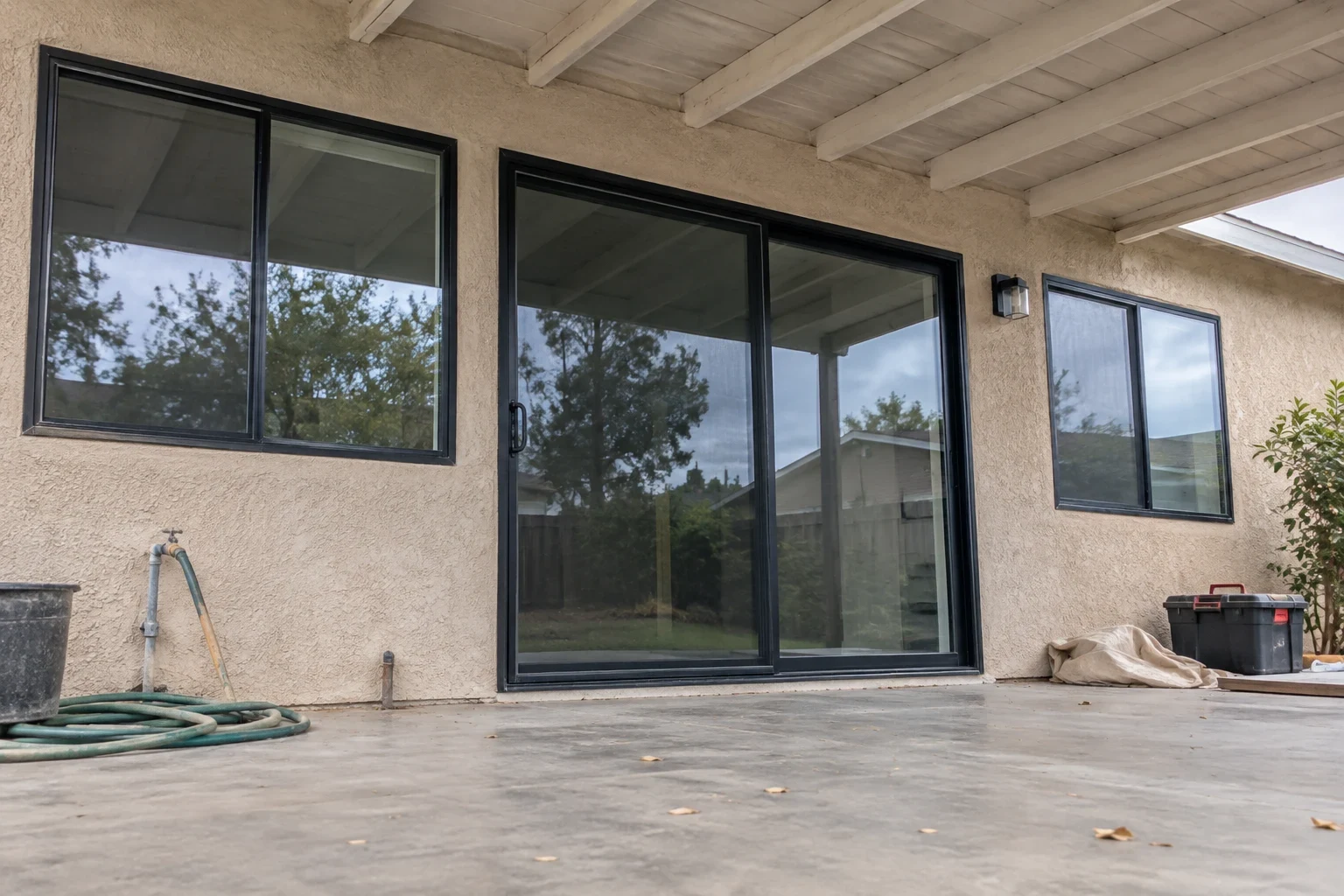
Yes. A large single-pane slider can let in as much heat as several windows. Our sliding door replacement service uses the same kind of dual-pane Low-E glass.
Find Out Which Windows Are Working Against You
We'll walk your home, check each window and tell you plainly where an upgrade will help and where it won't. There's no charge and no obligation.